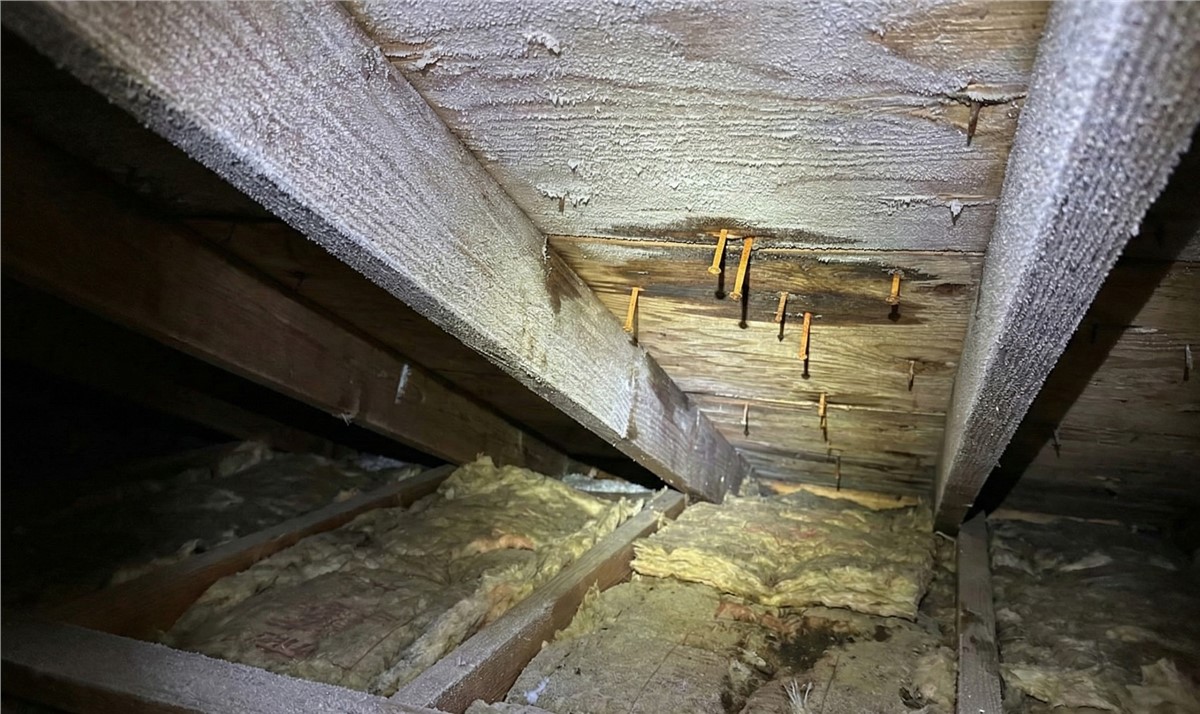
The 30-Second Warning:
If you see white frost on your roof rafters or "rusty" nails in your attic, your home is currently losing the battle against moisture. This isn't a roofing leak—it’s Internal Moisture Migration. When the temperature rises, this frost will melt, creating "Attic Rain" that destroys insulation, rots structural lumber, and triggers toxic mold growth. You must Air Seal and Ventilate now to prevent a five-figure repair bill this spring.
1. The Physics of Frost: Why It Happens
To solve attic frost, we have to understand the science of the Stack Effect.
In the winter, your home acts like a chimney. Warm air is less dense than cold air, so it rises toward the ceiling. Because your house isn’t a vacuum-sealed box, that warm air finds "bypasses"—small holes, gaps, and cracks—and escapes into the attic.
When this warm, moisture-laden air hits the freezing-cold underside of your roof (the roof sheathing), it undergoes desublimation. This is the process where water vapor turns directly into ice without becoming a liquid first.
2. The "Bypass" Map: Where is Your Heat Escaping?
Most homeowners think their insulation is a barrier. It isn't. Fiberglass and cellulose insulation are like a wool sweater; they keep you warm, but the wind blows right through them. You need a "windbreaker"—which, in your attic, is called Air Sealing.
Look for these common culprits:
• The Chimney Chase: The gap between the brick or metal flue and the wood framing is often wide open.
• Top Plates: Every wall in your house has a wooden "top plate" in the attic. There is a gap on both sides of that wood where air leaks from the wall cavities.
• Electrical Penetrations: Every wire that goes through your ceiling to a light fixture or outlet is a tiny straw sucking warm air upward.
• Bath Fans: Many older homes have bath fans that vent directly into the attic or are connected to leaky, uninsulated flex-ducts.
3. What to Look For: An Attic "Self-Exam"
If you are brave enough to head into the attic (wear a mask and eye protection!), look for these specific indicators of a failing system:
A. The "Rusty Nail" Indicator
If the tips of the nails protruding through the roof deck are orange, rusted, or have "rings" of water staining around them, frost has been forming and melting there for years. This is the "canary in the coal mine."
B. "Ghosting" and Blackened Insulation
If your pink or white insulation looks black or dirty in specific spots, that isn't dirt—it’s a filter. The insulation is filtering dust out of the air as it leaks out of your house. This proves exactly where your air leaks are located.
C. Delaminating Plywood
Check the roof deck. If the layers of the plywood are starting to peel or feel soft to the touch, the wood is "rotting from the inside out." This happens when the moisture content of the wood stays above 20% for extended periods. [2]
4. Why You Should Be Worried: The Risks
Ignoring attic frost is a gamble with your home's equity and your family's health.
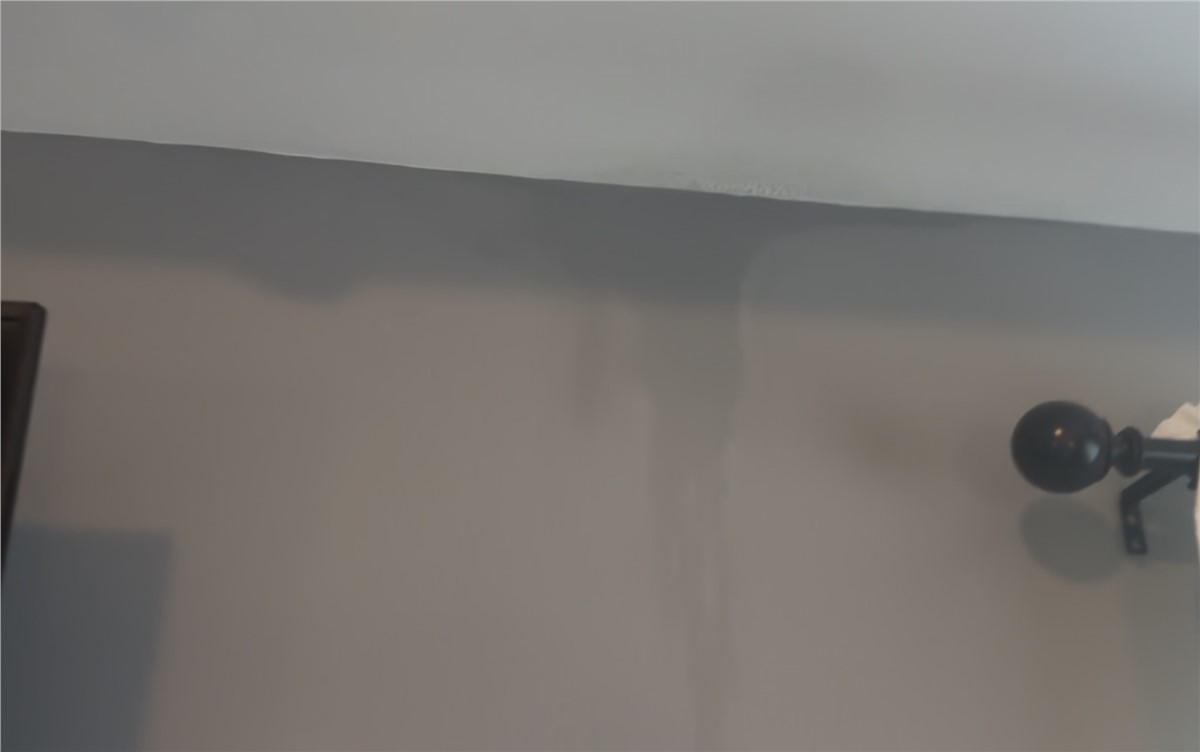
• Attic Rain: When a "Polar Vortex" ends and temperatures jump from 10°F to 40°F in a single day, all that frost melts simultaneously. It can look like a major pipe burst, soaking your ceiling drywall.
• Mold Growth: Aspergillus and Cladosporium are common attic molds. While they stay in the attic during winter, the Stack Effect can pull those spores down into your living space during the summer, exacerbating asthma and allergies. [3]
• Ice Damming: Frost is a sign of heat loss. That heat also warms the roof shingles, melting the snow above. The water runs down to the eaves, freezes, and creates an ice dam that can rip off gutters and force water under your shingles.
5. The Solution: The "Three-Pillar" Approach
You cannot simply "add more insulation" to fix frost. In fact, adding insulation without air sealing can actually make frost worse by keeping the roof deck even colder.
1. Seal the Bypasses: Use two-part spray foam or fire-rated caulk to seal every hole in the "lid" of your home.
2. Mechanical Venting: Ensure all bathroom and kitchen fans are vented through the roof with insulated ducting and a backdraft damper.
3. Balanced Ventilation: You need a 1:300 ratio of vent area to attic floor space. This ensures that any residual moisture is "washed" out of the attic by a constant stream of fresh, cold air, often addressed during a full roof replacement [4]
Is Your Attic Safe?
Don't wait for the "Attic Rain" to start. We offer comprehensive attic audits using infrared cameras to find the hidden leaks you can't see.
Sources & Citations
• [1] Building Science Corporation: BSI-049: The State of the Attic – Deep dive into moisture transport and the necessity of air sealing.
• [2] APA – The Engineered Wood Association: Form No. R450: Condensation: Causes and Control – Technical data on wood moisture content and delamination risks in unvented spaces.
• [3] Environmental Protection Agency (EPA): A Brief Guide to Mold, Moisture, and Your Home – Guidelines on the health impacts of indoor moisture and mold growth.
• [4] International Residential Code (IRC): Section R806: Roof Ventilation – The legal requirements for attic ventilation ratios and air clearance.
Is Your Attic Safe?
Don't wait for the "Attic Rain" to start. We offer comprehensive attic audits using infrared cameras to find the hidden leaks you can't see.
Expert Insight: According to the Building Science Corporation, moisture moves through a building in four ways: liquid flow, capillary suction, convection, and diffusion. In attics, air-borne moisture (convection) is responsible for 99% of frost issues. [1]
Subscribe to Stan's Roofing & Siding's Blog



Comments