If you’ve ever walked into your attic on a July afternoon in Illinois, you know it feels like an oven. But did you know that heat isn't just uncomfortable—it’s actually attacking your roof from the inside out?
Welcome to the first part of our "Standard Terms" series, where we break down the complicated parts of your home into plain English. Today, we’re talking about Roof Ventilation.
What is Roof Ventilation, anyway?
Think of your roof like a pair of lungs. For it to stay healthy, it needs to "inhale" cool air and "exhale" hot, moist air.
The Intake (The Inhale): Cool air enters through vents at the lowest part of your roof (usually your soffits).
The Exhaust (The Exhale): Hot air naturally rises and escapes through vents at the highest peak of your roof (ridge vents or box vents).
Why does it matter to you?
Proper ventilation isn't just a "nice to have"—it performs three critical jobs for your home:
It Stops Your Shingles from "Cooking": On a 90-degree day, an unventilated attic can reach 150 degrees. This extreme heat bakes your shingles from underneath, causing them to curl, crack, and age twice as fast.
It Fights the "Ice Dam" Monster: In the winter, a warm attic melts the snow on your roof. That water runs down to the cold edges and freezes, creating ice dams that can tear off gutters and leak into your walls.
It Prevents "Attic Rain": Every time you shower or cook, moisture rises. Without ventilation, that moisture gets trapped in the attic, turns into condensation, and can lead to mold and rotted wood.
The "Goldilocks" Rule
The key to ventilation is balance. You want exactly as much air coming in as you have going out. If the system is off-balance, your attic will either stay too hot or start pulling conditioned air out of your living space—which wastes your money.
VENTS
Not all vents are created equal. Depending on the shape of your roof and the age of your home, you likely have one of these three common setups. Here is the breakdown of how they work:
1. The Ridge Vent (The Modern Standard)
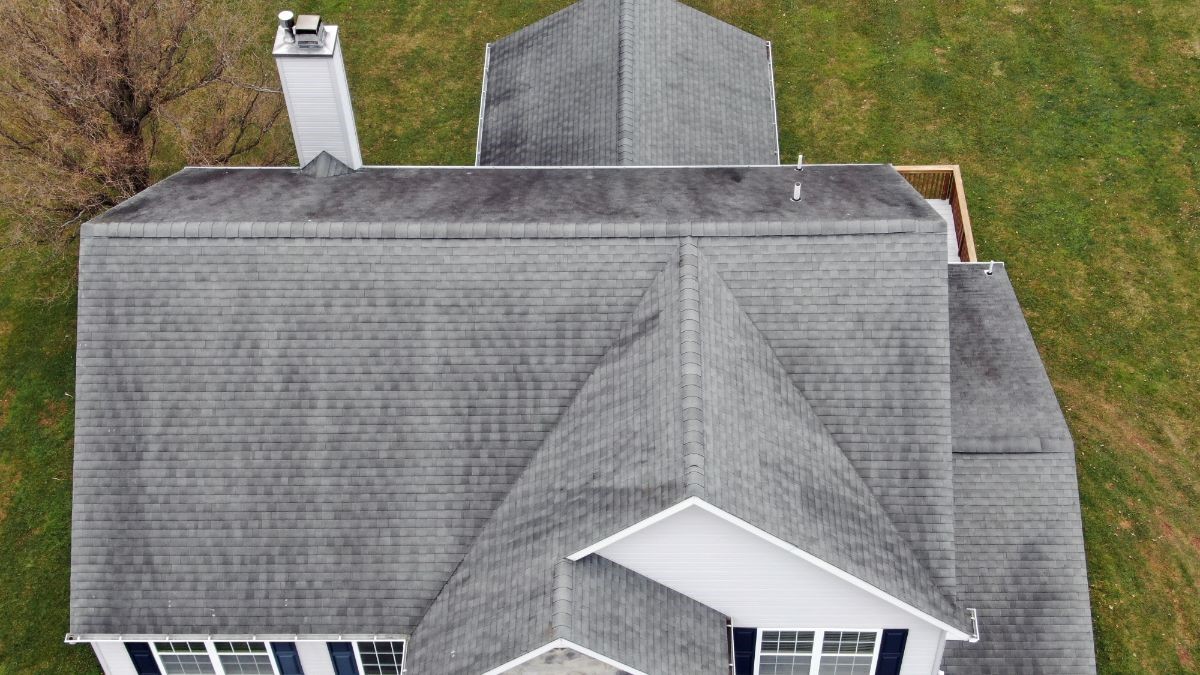
If you look at the very peak of your roof and see a slightly raised, shingled line running the entire length, you have a Ridge Vent.
How it works: It’s a continuous gap cut into the ridge of the roof, covered by a vented cap.
Why we love it: It’s the most efficient exhaust method because it uses the entire peak of the house to let heat out evenly. It’s also nearly invisible from the street.
2. Box Vents (The Traditional Workhorse)
These are the square or rectangular "domes" you see sitting near the top of the roof.
How it works: Each box vent covers a specific hole cut into the roof deck. They rely purely on natural convection (heat rising).
The Catch: Because they are "spot" vents, you usually need several of them to move enough air. If one is blocked, that section of your attic stays hot.
3. Power Vents (The "Turbo" Boost)
These look like large metal mushrooms and contain a motorized fan.
How it works: A thermostat triggers the fan to kick on when the attic reaches a certain temperature (usually around 100-110°F).
Pro Tip: These are great for roofs with weird shapes where natural airflow is difficult, but they do require electricity and the motors eventually need maintenance.
Don't Forget the "Hidden" Vents: Soffits
Regardless of which exhaust vent you have on top, they will not work without Soffit Vents. These are the vents located under your eaves. If your soffits are painted over or blocked by attic insulation, your ridge vent is essentially trying to "breathe through a sealed straw."
What should the homeowner do next?
Take a walk outside today. Look at the peak of your roof and under your eaves.
Do you see a ridge vent?
Are your soffit vents clear of bird nests or debris?
If you aren't sure if your system is balanced, that is exactly what we check during a Stan’s Care Club inspection. We don't just look at the shingles; we look at the "lungs" of the house.
Subscribe to Stan's Roofing & Siding's Blog



Comments