To a homeowner, a row of icicles hanging from the gutters can look like a winter postcard. But to a roofer, those icicles are often a warning sign of a "Winter Saboteur" known as an ice dam.
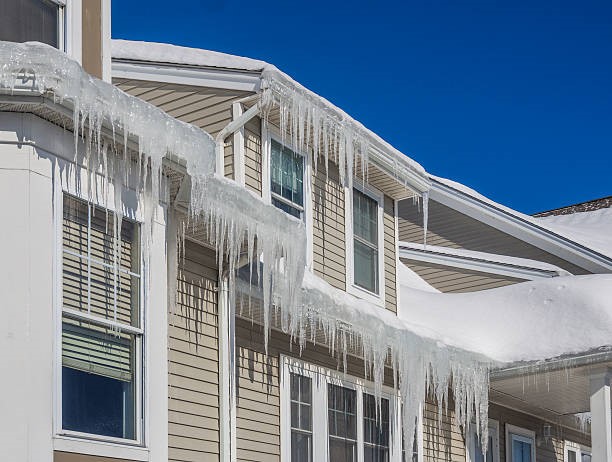
If you’ve ever wondered why your roof is leaking even though the shingles look fine, or why your gutters are pulling away from the house, you’re likely dealing with this common Illinois roofing headache.
What exactly is an Ice Dam?
An ice dam is a thick ridge of solid ice that forms along the eaves (the edges) of your roof. While it looks like a simple ice buildup, its name is literal: it acts as a dam that traps melting snow-water behind it.
The Science of the "Squeeze"
Ice dams aren't caused by the weather alone; they are caused by a temperature conflict on your roof. It happens in a three-step cycle:
1. The Heat Leak: Warm air from your home escapes into the attic because of bypasses or thin insulation. This warms the roof decking to above 32°F.
2. The Mid-Roof Melt: The snow touching that warm roof melts into water and trickles down toward the gutters.
3. The Eave Freeze: Your eaves overhang the house and aren't warmed by the attic. When the water reaches this "cold zone," it instantly freezes.
As this cycle repeats, the ice grows thicker, eventually creating a pool of liquid water sitting directly over your shingles.
Why It’s Dangerous for Your Home
Unlike rain, which sheds off the roof instantly, an ice dam forces water to sit still. This leads to:
• Shingle Lifting: Water expands as it freezes, literally prying your shingles upward.
• Gutter Failure: The sheer weight of a solid ice dam (which can weigh hundreds of pounds) can rip gutters and fascia boards clean off the house.
• Internal Rot: Once the water gets under the shingles, it soaks your underlayment, leading to mold and water stains on your ceilings.
🛑 PRO-TIP: The "Salt Mistake"
When homeowners see an ice dam, the first instinct is often to throw salt or "ice melt" pucks onto the roof. Don't do it!
* Chemical Damage: Traditional rock salt is highly corrosive and can permanently damage your shingles and aluminum gutters.
* Landscaping Risk: When the salt eventually melts and runs off, it can kill the grass and expensive shrubs surrounding your foundation.
* The Better Way: If you must use a melting agent, look for calcium chloride (not rock salt) and place it inside a nylon stocking laid vertically across the ice dam to melt a channel for the water to escape.
Conclusion:
Prevention is the Best Cure
While there are ways to manage ice dams once they appear, the only permanent solution is to address the root cause: insulation and ventilation. By sealing attic bypasses and ensuring your roof stays at a uniform temperature, you can stop the "Winter Saboteur" before it ever has a chance to freeze.
If you’re worried about icicles or seeing signs of leaking, it’s time to have a professional look at your attic’s "health" before the next big freeze.
Subscribe to Stan's Roofing & Siding's Blog




Comments